What is preservation bias?
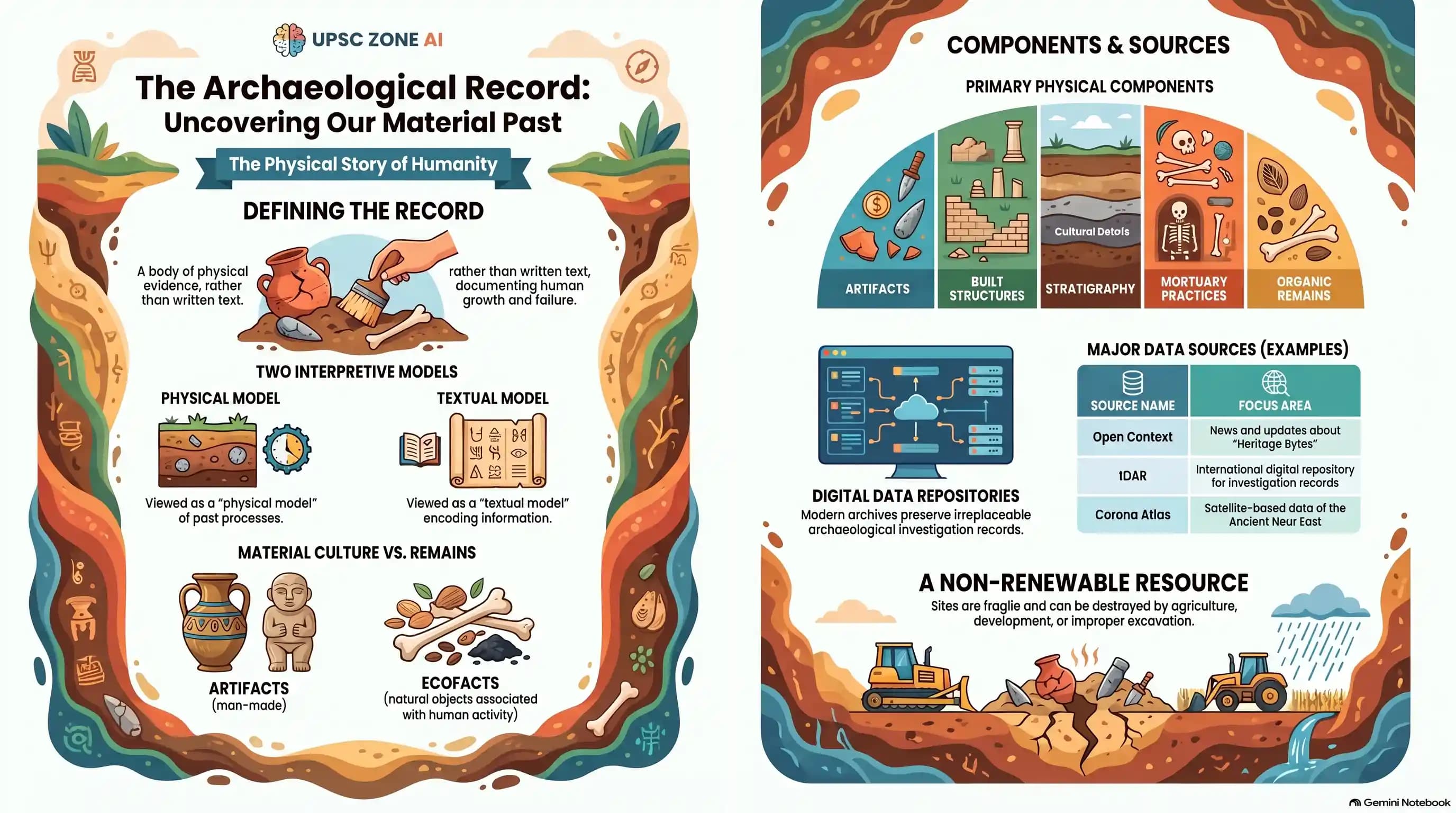
Preservation bias refers to the phenomenon where the archaeological record provides an incomplete and skewed representation of the past because different materials decay at different rates. This bias occurs because organic materials—such as wood, textiles, hides, and food—often decay and perish quickly, leaving behind only partial evidence of ancient human activity.
Key aspects of preservation bias include:
Live Test Series
Join thousands of aspirants in our weekly live mock tests. Get real-time ranking and detailed analysis.
Survival of Durable Materials: Objects made of durable materials like pottery, metal, stone, and bone are far more likely to survive. Consequently, these items often dominate the archaeological record, even though they may have represented only a small portion of a society's original material culture.
Loss of Perishable Commodities: Evidence for many aspects of daily life and trade, including slaves, wine, clothing, and wooden tools, is rarely recorded archaeologically because these materials perish easily.
The Role of Special Conditions: Fragile organic remains typically only survive in rare, special environmental conditions, such as being waterlogged, charred, frozen, or desiccated (dried out). For example, plant seeds are frequently found only if they were burned during cooking, a process that helps preserve them from natural decay.
Impact on Interpretation: Because of this bias, archaeologists are often working with only a fraction of the original evidence. Interpreting the past requires acknowledging these gaps to avoid "privileging" the durable materials found in the record over the perishable ones that have been lost.
Live NCERT Foundation
Master the basics with our live NCERT classes. The perfect foundation for your UPSC journey.
Why is the archaeological record considered a finite resource?
Aug 14, 2026

Explain UPI Charges on payments?
Aug 13, 2026
Explain the Merchant Discount Rate controversy for prepaid wallet payments.
Aug 13, 2026
How does Chilika Lake's unique ecology support local livelihoods and wildlife?
Aug 4, 2026

Explain the significance of the 2026 Supreme Court sex work judgment.
Aug 3, 2026