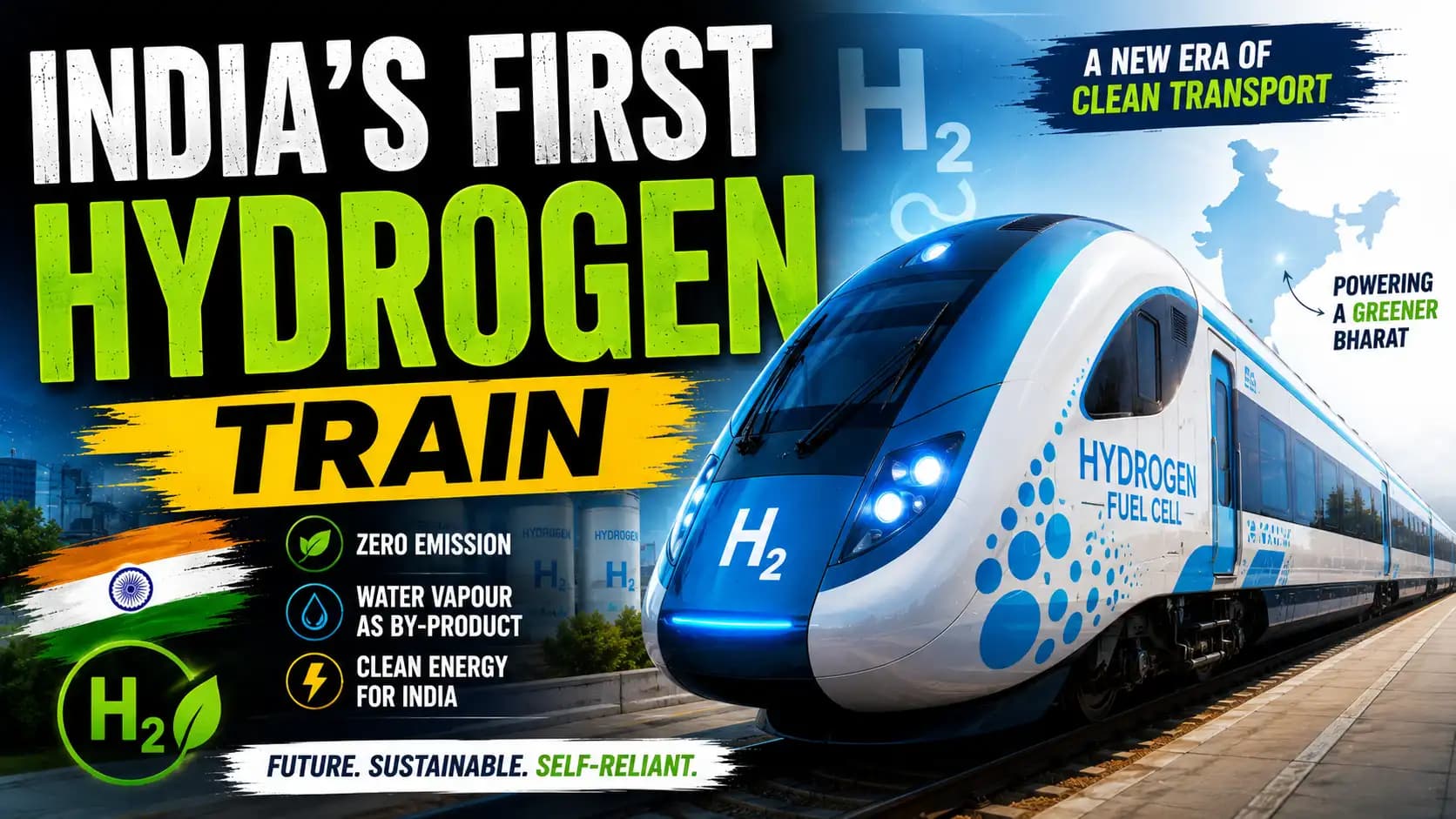
How does India's hydrogen train technology compare to global counterparts?
India's entry into hydrogen-powered rail technology places it within a select group of nations—including Germany, Japan, China, and the United States—that are actively exploring this next-generation propulsion. While India is a relatively recent entrant, its technology stands out in terms of scale, ambition, and its integrated domestic approach, though it remains dependent on global supply chains for core components.
Scale and Capacity
India’s hydrogen train technology significantly exceeds the scale of most global counterparts currently in operation:
Live Test Series
Join thousands of aspirants in our weekly live mock tests. Get real-time ranking and detailed analysis.
Train Configuration: Most hydrogen passenger trains abroad typically consist of two to four coaches and are designed for short regional services. In contrast, India’s train is a 10-coach set, making it the world’s longest hydrogen train on a Broad Gauge platform.
Passenger Capacity: While international models are often limited to smaller regional capacities, the Indian train is designed to carry approximately 2,600 passengers, demonstrating the scalability of the technology for high-capacity operations.
Power Output: The Indian trainset is described as the most powerful of its kind, with a total traction capacity of 2,400 kW (delivered via two 1,200 kW driving power cars).
Indigenous Integration vs. Off-the-Shelf Acquisition
A major point of comparison is how India has developed its technology versus other nations:
Live NCERT Foundation
Master the basics with our live NCERT classes. The perfect foundation for your UPSC journey.
System Integration: Unlike Germany, which initially purchased complete Coradia iLint trains from the French manufacturer Alstom, India has designed, built, and integrated its own vehicle and fuelling system. The train was built at the Integral Coach Factory (ICF) in Chennai and integrated by Medha Servo Drives.
Complete Ecosystem: India has established an integrated ecosystem that includes the country's largest railway hydrogen refuelling facility at Jind, Haryana. This facility handles on-site production via electrolysis, compression, and simultaneous dispensing for both power cars.
Technological Gaps and Global Dependencies
Despite the "Made-in-India" framing, the core energy-conversion technology still relies on the same global supply chain used by international counterparts:
Fuel Cell Stacks: The heart of the train—the Proton Exchange Membrane (PEM) fuel cell stacks—is currently imported from Canada’s Ballard Power Systems.
Advanced GS Course
Deep dive into General Studies with our comprehensive expert-led modules.
Critical Materials: India currently lacks the materials science capability to manufacture essential subcomponents like perfluorosulfonic-acid films (membranes), platinum-group metal catalysts, and carbon-fibre paper used in gas diffusion layers.
Supply Chain Vulnerability: The global hydrogen-rail supply chain is described as "wobbly". For instance, Alstom had to pull much of its fleet in Germany for urgent rework in late 2024 due to fuel cell degradation and software issues. India’s reliance on these imported stacks means it is not yet insulated from these global failure modes or service delays.
Safety and Certification
India has implemented multi-layer safety systems comparable to international standards to manage the risks associated with hydrogen’s flammability. The entire system underwent an independent third-party safety assessment by TÜV SÜD, Germany, and adheres to internationally accepted standards such as NFPA-2 and the ISO 19880 series. These systems include continuous monitoring for leaks, automatic shut-off valves, and non-stop ventilation to prevent hydrogen accumulation.
Hydrogen-Powered Rail Mobility in India
Jul 17, 2026
How does India's hydrogen train technology compare to global counterparts?
Jul 17, 2026
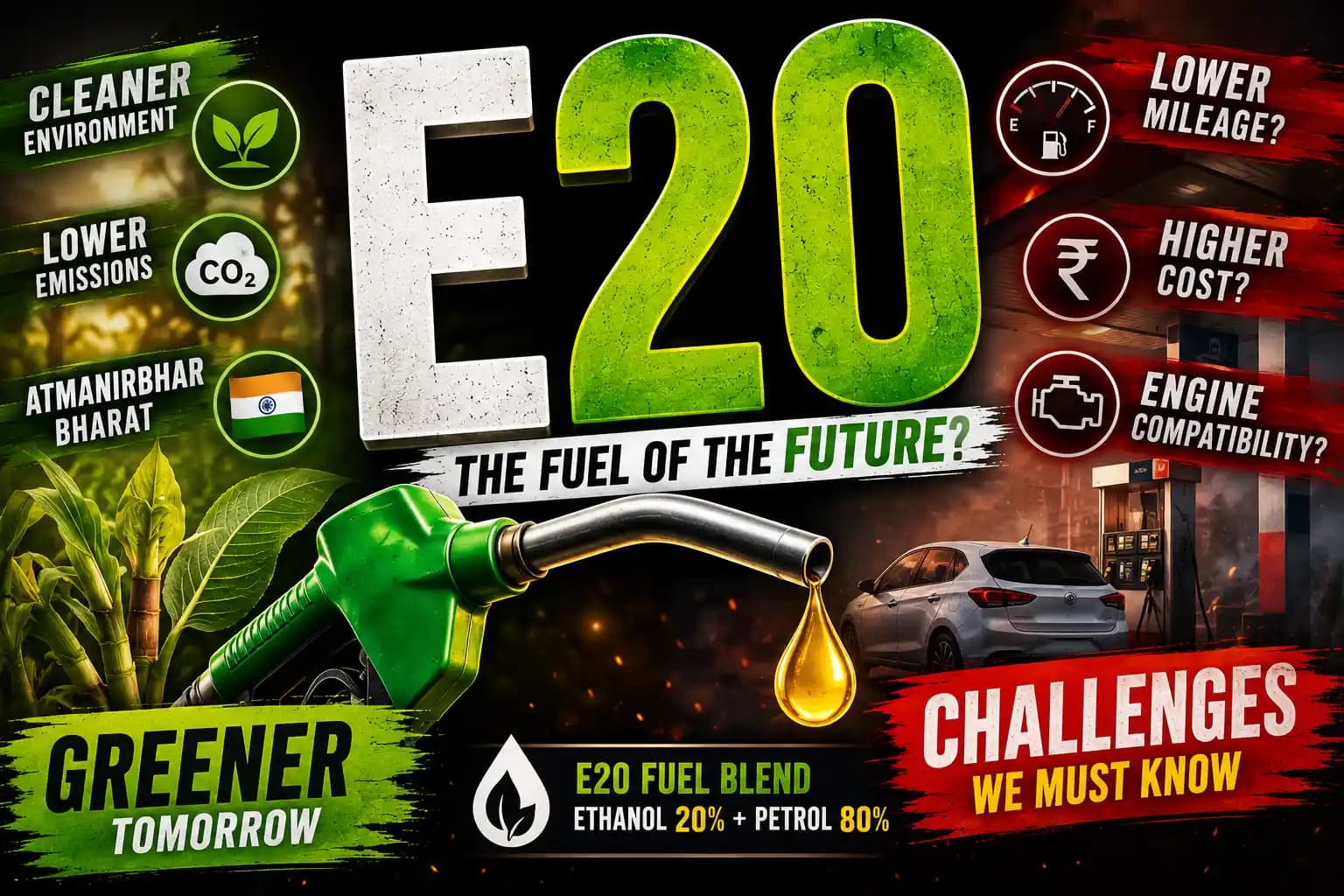
How does E20 affect mileage for older vehicles?
Jul 15, 2026
What is E20 and how will it reduce oil prices?
Jul 15, 2026

Human Rights, Information Access, and Institutional Frameworks: An Analysis of Article 19 and Related Legal Principles
Jul 14, 2026