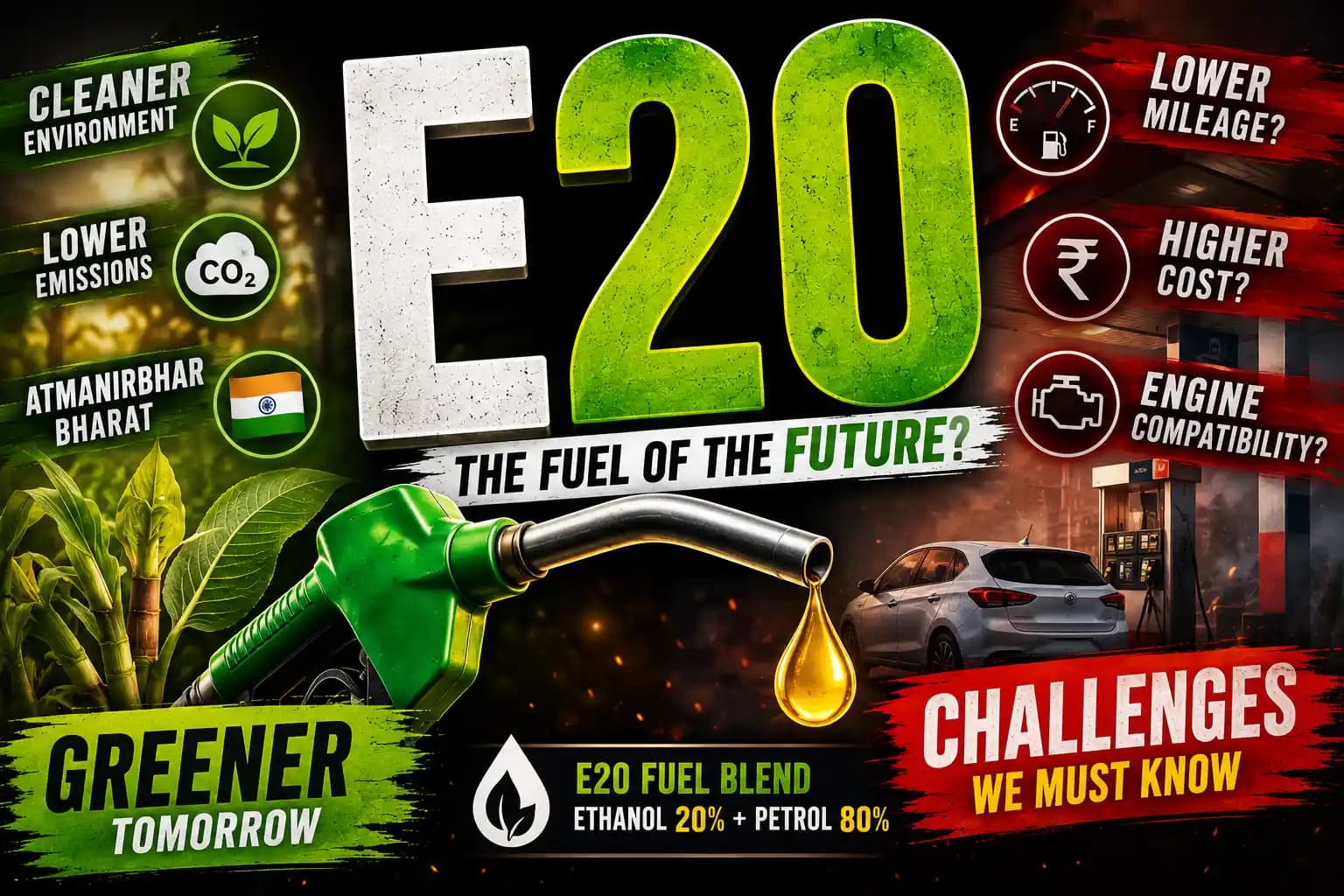
How does E20 affect mileage for older vehicles?
The impact of E20 fuel on the mileage of older vehicles is a significant concern, with various studies and consumer surveys showing a notable reduction in fuel efficiency compared to pure petrol.
Reasons for Reduced Mileage
The primary reason for a drop in mileage is that ethanol has a lower energy density than petrol. Specifically, ethanol contains approximately one-third less energy per litre, meaning vehicles must consume more fuel to produce the same power output.
Live Test Series
Join thousands of aspirants in our weekly live mock tests. Get real-time ranking and detailed analysis.
Estimated Mileage Drops
The extent of the mileage reduction depends on the vehicle’s design and its level of compatibility with ethanol:
Official Government Estimates (NITI Aayog): For older four-wheelers designed for E0 fuel but calibrated for E10, fuel efficiency is estimated to decline by 6–7%. For two-wheelers, the estimated drop is 3–4%.
Ministry of Petroleum and ARAI Data: Other government-backed studies suggest a general decrease of 3–6% in fuel efficiency across various older vehicle types.
IIT Kanpur Study: Some researchers have found more conservative impacts, stating the decrease in fuel efficiency is typically less than 5% and can be influenced by driving habits and road conditions.
Live NCERT Foundation
Master the basics with our live NCERT classes. The perfect foundation for your UPSC journey.
Real-World and Consumer Reports
While official figures are often below 10%, consumer feedback and independent tests suggest a sharper decline for legacy vehicles:
LocalCircles Survey (2026): A large-scale survey of over 44,000 owners of petrol vehicles manufactured before 2023 found that 66% of respondents reported a mileage drop of more than 10%.
Extreme Reports: Approximately 23% of surveyed owners reported fuel efficiency losses exceeding 20% since the nationwide rollout of E20 fuel.
Independent Tests: Some real-world testing has reported mileage losses ranging between 8% and 12% in older vehicles.
Advanced GS Course
Deep dive into General Studies with our comprehensive expert-led modules.
Mechanical Factors in Older Engines
Older vehicles suffer more from E20 fuel because their engines and Electronic Control Units (ECU) are not designed or calibrated for the altered air-fuel ratios of ethanol blends. This can lead to:
Poor Combustion: Because the engine cannot automatically adjust its parameters for higher ethanol content, combustion efficiency is reduced.
Component Wear: Older engines may experience faster deterioration of non-compatible parts like fuel lines, gaskets, and seals, which can indirectly affect engine health and performance over time.
To mitigate these issues, manufacturers like Maruti Suzuki are reportedly developing retrofit kits (expected to cost between ₹4,000 and ₹6,000) that include ethanol-compatible components to help older vehicles handle higher blends more effectively.
How does E20 affect mileage for older vehicles?
Jul 15, 2026

What is E20 and how will it reduce oil prices?
Jul 15, 2026

Human Rights, Information Access, and Institutional Frameworks: An Analysis of Article 19 and Related Legal Principles
Jul 14, 2026

Why are IITs and IIMs resisting the VBSA Bill?
Jul 11, 2026

Explain the legal issues surrounding neutral ships in combat zones.
Jun 29, 2026