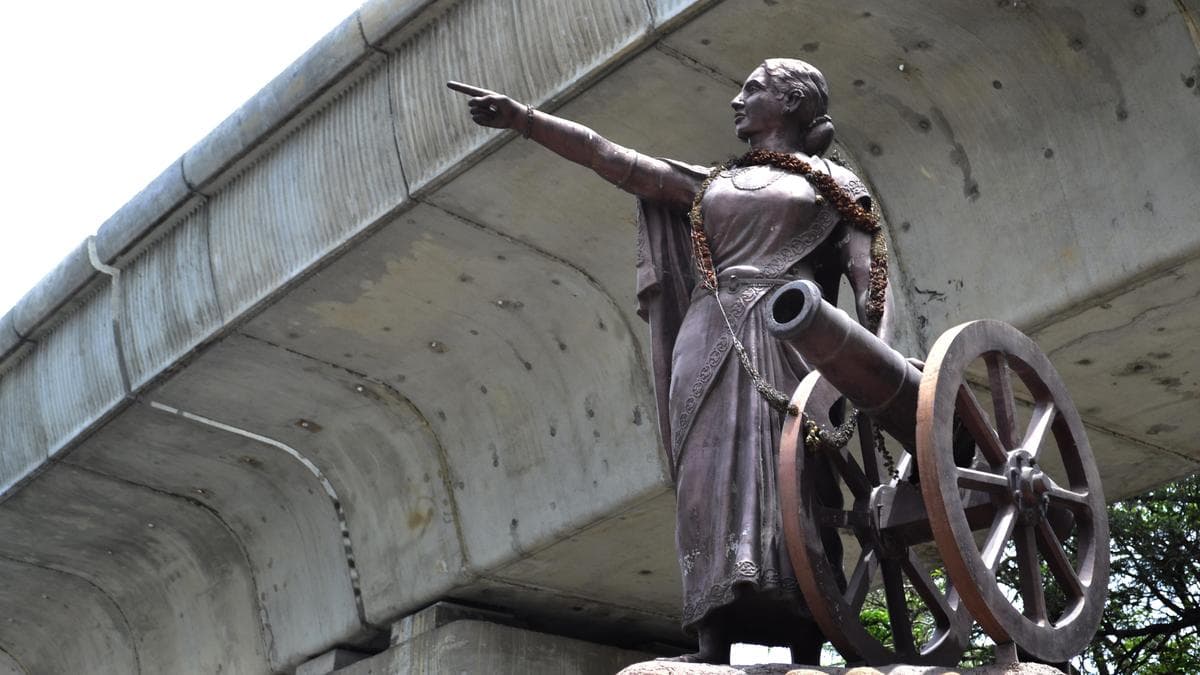
Rani Abbakka Chowta: 16th-Century Maritime Resistance to European Colonial Expansion
Rani Abbakka Chowta, the 16th-century ruler of the coastal principality of Ullal in present-day Karnataka, represents one of the earliest documented armed resistances by an Indian monarch against European colonial forces.
Relevance for UPSC Aspirants
For the Civil Services Examination, Rani Abbakka's resistance is significant for General Studies Paper I, specifically under Indian history, regional resistance to early European dominance, maritime trade defense, and the role of women rulers. Her statecraft also provides illustrative material on inter-faith military coalitions and matrilineal governance structures in pre-colonial peninsular India.
Live Test Series
Join thousands of aspirants in our weekly live mock tests. Get real-time ranking and detailed analysis.
Historical Context and Anti-Colonial Struggle
Ullal was a prosperous port town located near Mangaluru that maintained thriving maritime trade connections across the Arabian Sea. Abbakka belonged to the Chowta dynasty of the Tuluvu community, which observed matrilineal inheritance and authority, enabling women to assume pivotal administrative and military positions. Although married to Lakshmappa Arasa of the neighboring Banga kingdom, she later returned to Ullal to govern autonomously.
- First Resistance to Portuguese Encroachment: Around the mid-1500s, a Portuguese fleet under Admiral Dom Álvaro da Silveira arrived at Ullal demanding tribute and monopolistic control over trade routes. Abbakka rejected these demands, asserting the kingdom's sovereignty and commercial rights.
- Military Tactical Response: In an assault occurring around 1568, colonial forces entered Ullal. Abbakka tactically withdrew, consolidated local fighters, and executed a surprise counteroffensive that inflicted heavy casualties on the invaders. Accounts note her formal training in archery, horsemanship, and statecraft.
- Broad Coalition Building: Her administrative court and armed forces integrated diverse communities, including Hindus, Jains, and Muslims. To counter maritime incursions, she formed a strategic alliance with the Zamorin of Calicut in Keralam.
- Betrayal and Captivity: Internal dissent weakened Ullal's defense, leading to her capture through betrayal. According to documentation by the Indira Gandhi National Centre for the Arts (IGNCA), she maintained resistance even while held in captivity.
Cultural Legacy and State Recognition
Known traditionally as Abhaya Rani (fearless queen), her historical memory is preserved in coastal Karnataka through folk songs, the annual Veera Rani Abbakka Utsava, and traditional Yakshagana theatre performances. Her maritime defense legacy was formally recognized at the national level in 2009, when the Indian Coast Guard commissioned an inshore patrol vessel named after her.
Reported by The Hindu — National

J&K Waqf Board's Uniform Sermon Proposal: Statutory Oversight vs Religious Autonomy
Oct 15, 2026

Commercial Satellite Networks in Warfare: Strategic Risks of Private Tech Dependencies
Oct 15, 2026

CCEA Approves Fairfax's ₹53,000-Crore Strategic Acquisition of Majority Stake in IDBI Bank
Oct 15, 2026

SC Affirms Conversion to Islam Alone Does Not Entitle Individual to BC Reservation
Oct 15, 2026

Sugarcane Pricing: Centre Sets Up Committee on FRP and Sugar MSP Amid Farmer Protests
Oct 15, 2026