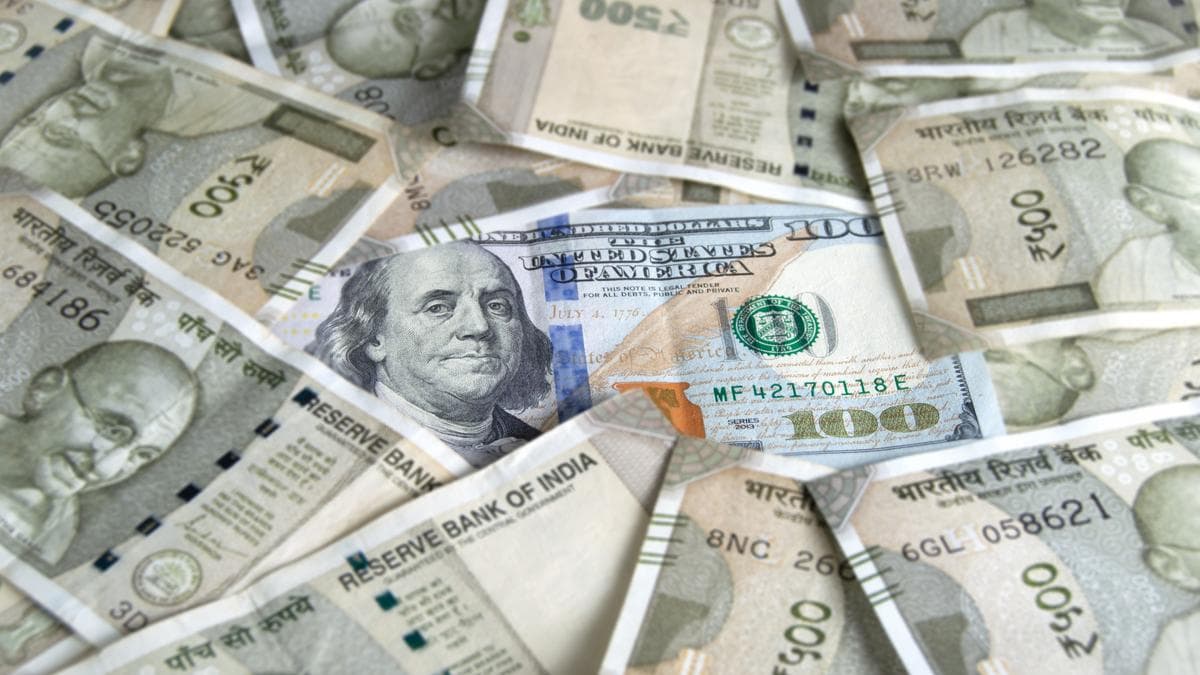
Rupee Weakens Against U.S. Dollar Amid Global Oil Surge and Geopolitical Pressures
Depreciation of the Indian Rupee
The Indian rupee declined by 29 paise to settle at 95.22 against the U.S. dollar on October 26, 2026. The slide was driven primarily by elevated international crude oil prices, higher U.S. Treasury yields, and persistent geopolitical tensions in West Asia and between Russia and Ukraine. Concurrently, Reserve Bank of India data showed that India's foreign exchange reserves fell by $5.011 billion to $721.016 billion during the week ended October 16, following a decline of $8.578 billion to $726.027 billion in the preceding reporting period.
Significance for the UPSC Syllabus
Understanding the dynamics of exchange rate fluctuations, foreign exchange reserves, and the balance of payments is fundamental to General Studies Paper III (Indian Economy). The performance of the domestic currency reflects external sector stability and macro-financial vulnerability to global shocks. For civil services aspirants, this highlights:
Live Test Series
Join thousands of aspirants in our weekly live mock tests. Get real-time ranking and detailed analysis.
- Imported Inflation: With Brent crude futures trading at $115.08 per barrel, a weaker domestic currency significantly inflates the cost of oil imports, worsening the trade deficit and exerting domestic inflationary pressure.
- Reserve Adequacy: Fluctuations in the central bank's foreign exchange reserves demonstrate the extent of central bank intervention required to cushion currency volatility and meet import requirements.
- Capital Flows: Global risk aversion and movements in the dollar index, which stood at 101.82, dictate the direction of portfolio capital and cross-border investment flows.
Underlying Mechanisms and Policy Context
Exchange rates in market-driven regimes adjust according to foreign currency demand and supply. Because India is heavily reliant on crude imports, sudden escalation in global energy prices increases foreign currency demand, depressing the local unit. Central monetary authorities routinely monitor the foreign exchange market to smooth out extreme disorderly moves, leaning on reserve buffers to maintain macroeconomic stability during external geopolitical and trade headwinds.
Reported by The Hindu — Business
12th BRICS Parliamentary Forum Held in New Delhi Emphasising Multilateral Dialogue and Reform
Oct 26, 2026

IIT Madras Study Examines Unequal Labour Market Impacts of Artificial Intelligence in India
Oct 26, 2026

Houthi Missile Attacks Target Saudi Infrastructure Amid Escalating West Asian Regional Conflict
Oct 26, 2026

Resolving Pricing and Structural Challenges in India's Sugarcane and Sugar Milling Sector
Oct 26, 2026

ICAR-CPRI Develops 'Kufri Jamunia' Biofortified Potato to Tackle Hidden Hunger
Oct 26, 2026