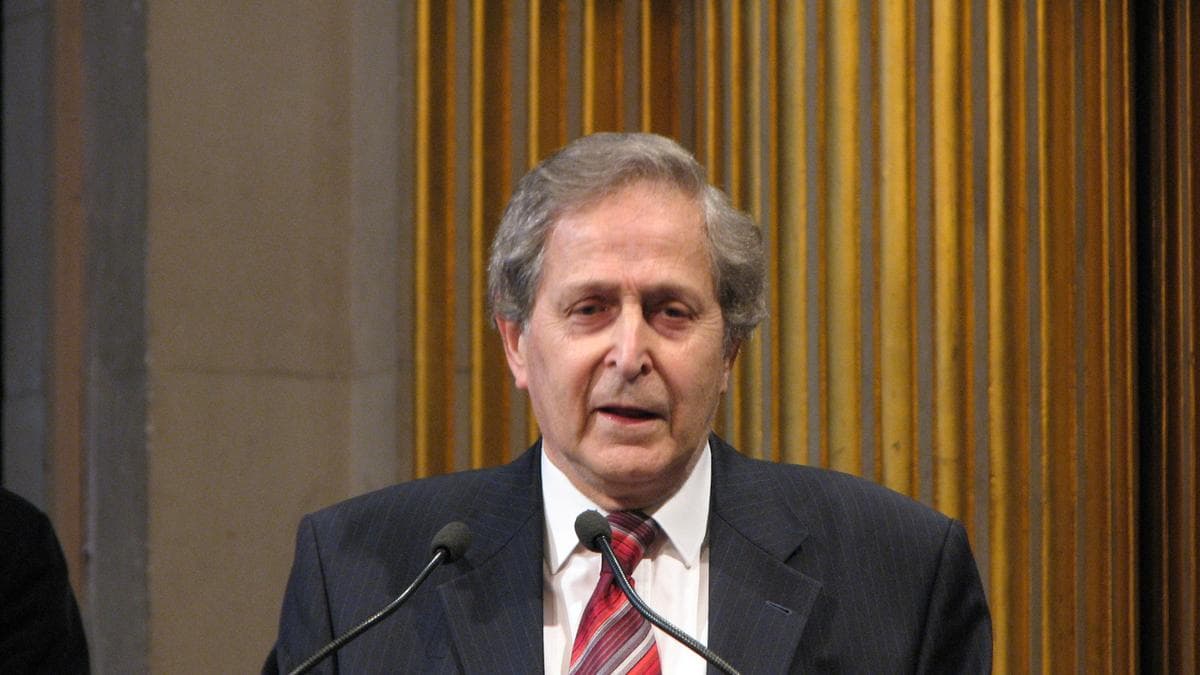
Laser Cooling Techniques and the Scientific Legacy of Nobel Laureate Claude Cohen-Tannoudji
French physicist and Nobel laureate Claude Cohen-Tannoudji passed away on October 22 at the age of 93. He played a foundational role in formulating methods to cool and trap neutral atoms with laser beams to temperatures barely above absolute zero. His discoveries revolutionized experimental physics by allowing scientists to study the quantum properties of isolated atoms, earning him a share of the 1997 Nobel Prize in Physics and enabling the creation of advanced atomic clocks and atom interferometers.
Significance for the UPSC Syllabus
This topic connects directly to General Studies Paper III under scientific developments, quantum mechanics, and historical contributions of Indian scientists:
Live Test Series
Join thousands of aspirants in our weekly live mock tests. Get real-time ranking and detailed analysis.
- Atomic and Quantum Physics: The mechanics of laser cooling showcase how the transfer of photon momentum and the manipulation of light polarization can control atomic kinetic energy at microscopic scales.
- High-Precision Technologies: Lowering temperatures to nanokelvins—billionths of a degree above absolute zero—is crucial for state-of-the-art atomic timekeeping, gravimetry, and creating exotic states of matter such as Bose-Einstein condensates.
- Indian Scientific Heritage: Cohen-Tannoudji highlighted the vital early contributions of Indian physicist S. Pancharatnam in optical pumping, highlighting India's historical role in modern optical physics.
Key Scientific Concepts and Indian Links
Traditional Doppler cooling employs lasers focused on atoms from opposed angles; as an atom moves toward a beam, it absorbs photons from that direction and emits them randomly, lowering its average kinetic energy. Because Doppler cooling reaches an operational threshold, Cohen-Tannoudji and Jean Dalibard explained how light polarization and atomic energy levels could surpass this limit, leading to Sisyphus cooling. In this technique, an atom's kinetic energy is transformed into potential energy and continuously dissipated using an optical pump. Beyond his foundational research, Cohen-Tannoudji shared notable connections with Indian physics. In 1994, he published an essay in Current Science recognizing S. Pancharatnam, a researcher who collaborated with C.V. Raman in Bangalore before passing away in 1969. Cohen-Tannoudji also presented the first Homi J. Bhabha Lecture at the Tata Institute of Fundamental Research in Mumbai in early 1999 and co-authored a 2001 paper with C.S. Unnikrishnan demonstrating a Bose-Einstein condensate in helium gas.
Reported by The Hindu — International
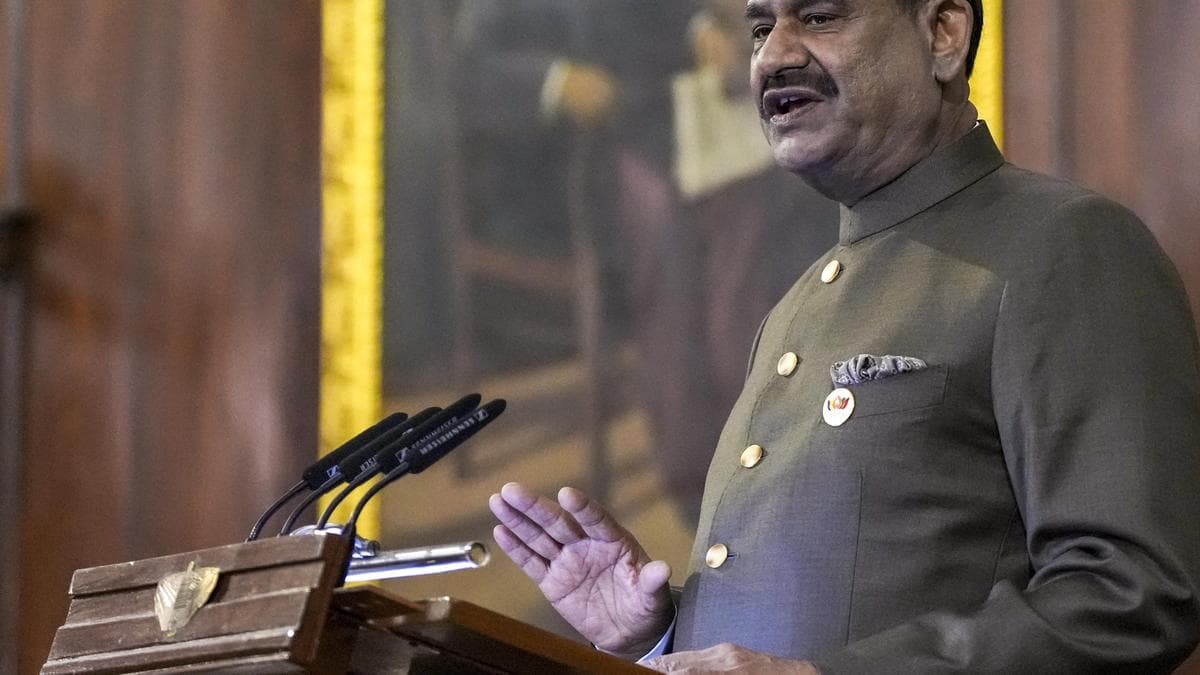
12th BRICS Parliamentary Forum Held in New Delhi Emphasising Multilateral Dialogue and Reform
Oct 26, 2026

IIT Madras Study Examines Unequal Labour Market Impacts of Artificial Intelligence in India
Oct 26, 2026

Houthi Missile Attacks Target Saudi Infrastructure Amid Escalating West Asian Regional Conflict
Oct 26, 2026

Resolving Pricing and Structural Challenges in India's Sugarcane and Sugar Milling Sector
Oct 26, 2026

ICAR-CPRI Develops 'Kufri Jamunia' Biofortified Potato to Tackle Hidden Hunger
Oct 26, 2026