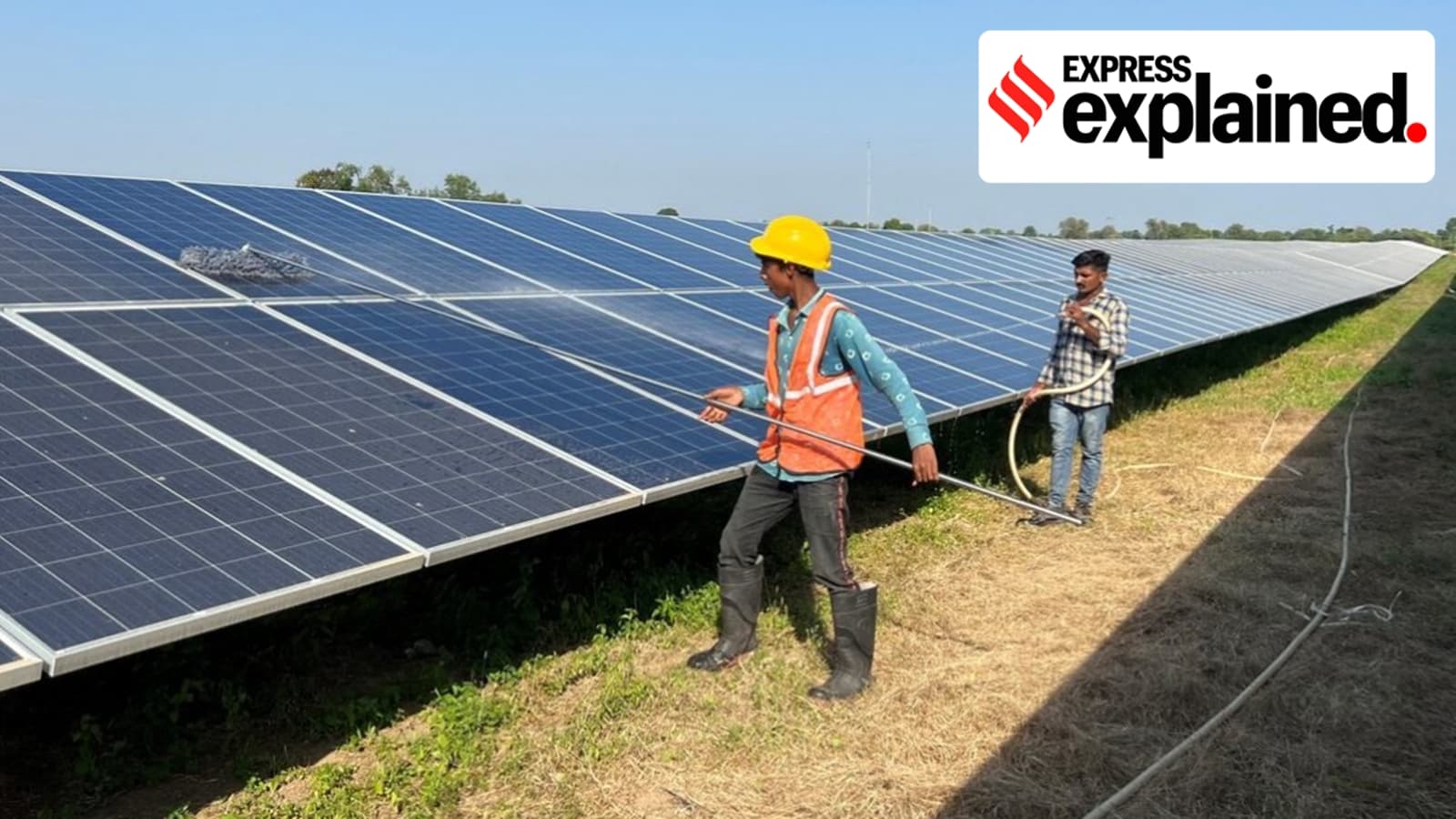
Agrivoltaics in India: Balancing Solar Expansion with Agricultural Productivity
Speaking at the Agrivoltaics World Conference 2026 in New Delhi, the Union Minister for New and Renewable Energy highlighted that nearly 30% of India's 160 million hectares of cropland could potentially host agrivoltaic systems. Simultaneously, the Union Agriculture Minister underscored the necessity of tailoring these installations to smallholder agriculture to prevent declines in crop production and safeguard farmer land rights.
Syllabus Relevance and Strategic Significance
This development directly pertains to General Studies Paper III, covering agricultural diversification, land-use efficiency, food security, and renewable energy targets. As India strives to expand solar power while maintaining self-sufficiency in food grains, agrivoltaics presents a dual-use land strategy, particularly in states with constrained non-agricultural land. The model's estimated national capacity stands at 1 to 2 terawatts (1,000 to 2,000 gigawatts).
Live Test Series
Join thousands of aspirants in our weekly live mock tests. Get real-time ranking and detailed analysis.
Technical Mechanics and Associated Challenges
Agrivoltaics (agri-PV) utilizes elevated photovoltaic structures positioned 3.5 to 4 metres above ground, enabling routine farming activities and machinery movement underneath. However, several critical structural and agronomic constraints require careful policy formulation:
- Higher Capital Costs: The civil and structural infrastructure required to elevate solar panels makes agrivoltaic projects approximately 25% to 30% more expensive than standard ground-mounted solar plants.
- Crop Specificity: Initial assessment studies demonstrate that shade-tolerant produce like fruits and leafy vegetables adapt well under panels, whereas staples such as rice and sugarcane are unsuitable.
- Smallholder Realities: Over 85% of Indian farmers are small and marginal, operating on an average landholding of 0.96 hectare. High upfront expenditures, complex financing, and unclear equipment maintenance responsibilities pose severe entry barriers.
- Agro-Climatic Diversity: While panel shading mitigates heat stress in hotter zones like Rajasthan, reduced sunlight can impair yields in other regions like Assam, Manipur, or Nagaland.
- Contractual and Operational Safeguards: Policy must institutionalize Farmer Producer Organisations (FPOs), transparent leasing contracts, dispute settlement mechanisms, grid procurement assurances, and unambiguous requirements to restore farmland after decommissioning.
Reported by Indian Express — Explained

12th BRICS Parliamentary Forum Held in New Delhi Emphasising Multilateral Dialogue and Reform
Oct 26, 2026

IIT Madras Study Examines Unequal Labour Market Impacts of Artificial Intelligence in India
Oct 26, 2026

Houthi Missile Attacks Target Saudi Infrastructure Amid Escalating West Asian Regional Conflict
Oct 26, 2026
Resolving Pricing and Structural Challenges in India's Sugarcane and Sugar Milling Sector
Oct 26, 2026

ICAR-CPRI Develops 'Kufri Jamunia' Biofortified Potato to Tackle Hidden Hunger
Oct 26, 2026