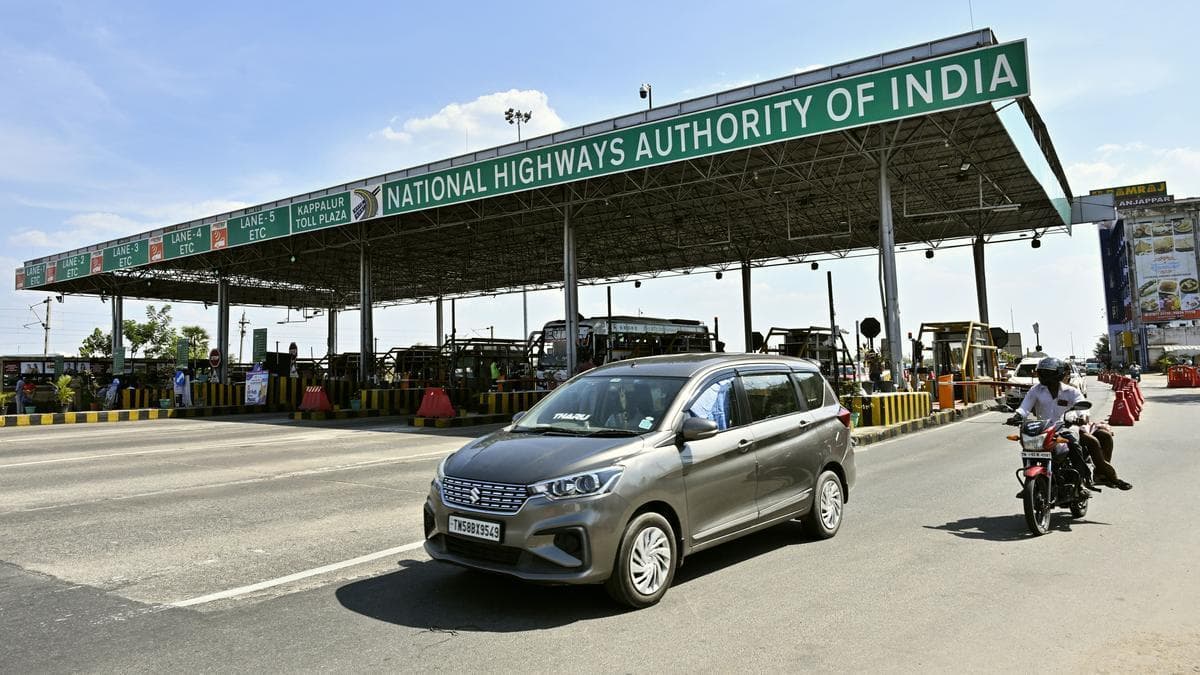
NHAI Issues New Guidelines for Toll Plaza Amenities and Smart Monitoring
The National Highways Authority of India (NHAI) has formulated comprehensive guidelines for the renovation, maintenance, and technology-driven oversight of public rest facilities and parking spaces situated at highway toll plazas.
Key Features of the Directives
- Universal Accessibility and User Safety: Toll plazas must provide at least one barrier-free, universally accessible toilet unit equipped with appropriate doorways and grab bars for persons with disabilities. Nighttime safety for families and women travelers is prioritized through proper illumination, CCTV surveillance of parking and approach zones, and the installation of sanitary napkin dispensers.
- Automated Monitoring and Public Grievance Redressal: Smart systems will track critical operational metrics, including water supply, power availability, sewage levels, leakages, foul odor, and occupancy rates, generating alerts for prompt intervention. Commuters can submit real-time feedback and lodge complaints through touchscreens or QR codes integrated with the Rajmargyatra app, which feeds into a centralized digital monitoring dashboard.
- Ban on Manual Entry into Septic Systems: The guidelines strictly prohibit manual entry into septic tanks, sewer conduits, and soak pits, mandating fully mechanized desludging and cleaning procedures.
- Multi-Tiered Accountability Structure: Quality assurance includes daily supervision, weekly technical inspections, monthly joint reviews, quarterly audits, and annual third-party reviews, accompanied by defined timelines for defect rectification and financial penalties for non-compliant service agencies.
- Modern Parking Infrastructure: Parking areas will feature designated bays, effective drainage channels, and provisions to accommodate future electric vehicle charging points.
Relevance for Civil Services Aspirants
Citizen-centric delivery of basic amenities along transit corridors is an essential component of governance, public health, and infrastructure administration. Incorporating Internet of Things (IoT)-style smart surveillance, digital grievance tools, and independent third-party performance assessments illustrates contemporary administrative reforms aimed at ensuring operational transparency. Crucially, enforcing fully mechanized desludging aligns with broader social justice mandates seeking to eradicate hazardous manual sanitation work and safeguard the safety and dignity of sanitation personnel.
Live Test Series
Join thousands of aspirants in our weekly live mock tests. Get real-time ranking and detailed analysis.
Reported by The Hindu — National

12th BRICS Parliamentary Forum Held in New Delhi Emphasising Multilateral Dialogue and Reform
Oct 26, 2026

IIT Madras Study Examines Unequal Labour Market Impacts of Artificial Intelligence in India
Oct 26, 2026

Houthi Missile Attacks Target Saudi Infrastructure Amid Escalating West Asian Regional Conflict
Oct 26, 2026

Resolving Pricing and Structural Challenges in India's Sugarcane and Sugar Milling Sector
Oct 26, 2026

ICAR-CPRI Develops 'Kufri Jamunia' Biofortified Potato to Tackle Hidden Hunger
Oct 26, 2026