NavIC and the Upcoming NVS-03 Mission: Restoring India’s Indigenous Navigation Capability
NavIC and the Upcoming NVS-03 Mission: Restoring India’s Indigenous Navigation Capability
NavIC (Navigation with Indian Constellation), formerly IRNSS, is India’s regional satellite-based Positioning, Navigation and Timing (PNT) system developed by ISRO. It provides accurate services over India and a region extending roughly 1,500 km beyond its borders, supporting civilian applications (transport, logistics, disaster management, agriculture) and strategic needs (defence, railways, maritime security).
Live Test Series
Join thousands of aspirants in our weekly live mock tests. Get real-time ranking and detailed analysis.
A receiver typically needs signals from at least four satellites for independent 3D positioning and clock correction. By mid-2026, only three satellites remained fully operational for positioning services due to the end-of-life of first-generation satellites, failures of imported atomic clocks, and the 2025 NVS-02 mission’s failure to reach its intended orbit. This left NavIC unable to deliver standalone positioning, forcing reliance on foreign systems such as GPS.
NVS-03 is the third satellite in the second-generation NVS series (and the twelfth overall in the IRNSS/NavIC constellation). It is scheduled for launch on 30 October 2026 aboard GSLV-F18 from the Satish Dhawan Space Centre, Sriharikota. Key features include:
- Mass of approximately 2,232 kg on the I-2K bus, with a planned 12-year design life.
- Navigation payloads operating in L1, L5 and S bands (L1 improves compatibility with mass-market smartphones, smartwatches and IoT devices).
Live NCERT Foundation
Master the basics with our live NCERT classes. The perfect foundation for your UPSC journey.
- Indigenous Rubidium atomic clocks developed by ISRO’s Space Applications Centre, addressing earlier reliability issues with imported clocks.
Successful deployment of NVS-03 is expected to restore the minimum four-satellite quorum for independent positioning. Subsequent satellites (NVS-04 and NVS-05) are in advanced stages of realisation. For UPSC, this topic is relevant to GS-III (Science & Technology, Internal Security), GS-I (Geography – applications), and current affairs. It illustrates strategic autonomy, dual-use technology, challenges in space systems reliability, and linkages with digital infrastructure and national security. Comparisons with GPS, Galileo, GLONASS and BeiDou, plus the role of atomic clocks and frequency bands, are frequent Prelims themes.
---
UPSC Prelims-style Question
Advanced GS Course
Deep dive into General Studies with our comprehensive expert-led modules.
Consider the following statements regarding India’s Navigation with Indian Constellation (NavIC) and the NVS-03 satellite:
1. NavIC provides Positioning, Navigation and Timing services over India and a region extending about 1,500 km beyond its borders.
2. A minimum of three operational satellites is sufficient for independent 3D positioning under NavIC.
3. NVS-03 carries an indigenous Rubidium atomic clock and transmits navigation signals in the L1, L5 and S bands.
4. NVS-03 is planned to be launched aboard a GSLV rocket from Sriharikota in late October 2026.
Which of the statements given above are correct?
A) 1, 3 and 4 only
B) 1, 2 and 3 only
C) 2 and 4 only
D) 1, 2, 3 and 4
Correct Answer: A
Brief Reasoning: Statement 1 is correct (standard coverage of the regional system). Statement 2 is incorrect—generally four satellites are required for independent 3D positioning and clock correction; with only three operational, standalone positioning was impaired. Statements 3 and 4 accurately reflect the published features of NVS-03 (indigenous Rubidium clock, L1/L5/S bands) and the scheduled GSLV-F18 launch on 30 October 2026 from Sriharikota.
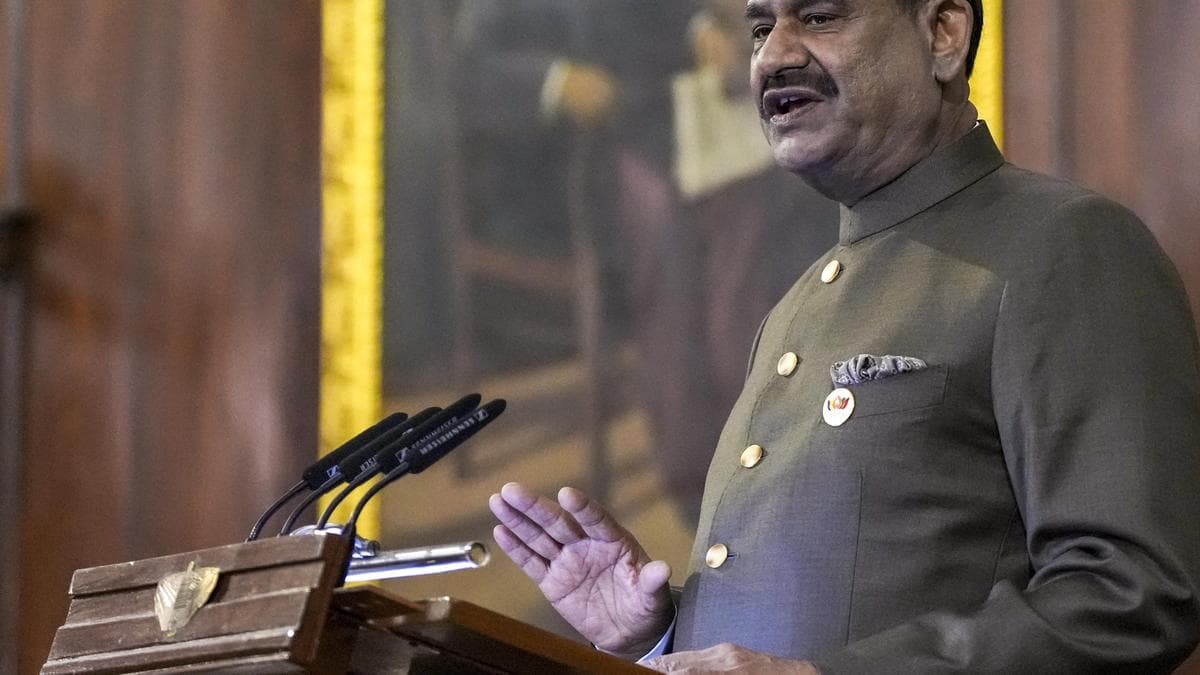
12th BRICS Parliamentary Forum Held in New Delhi Emphasising Multilateral Dialogue and Reform
Oct 26, 2026

IIT Madras Study Examines Unequal Labour Market Impacts of Artificial Intelligence in India
Oct 26, 2026

Houthi Missile Attacks Target Saudi Infrastructure Amid Escalating West Asian Regional Conflict
Oct 26, 2026
Resolving Pricing and Structural Challenges in India's Sugarcane and Sugar Milling Sector
Oct 26, 2026

ICAR-CPRI Develops 'Kufri Jamunia' Biofortified Potato to Tackle Hidden Hunger
Oct 26, 2026