
Debate Over Jammu and Kashmir Reservation Policy and the Fifty Percent Quota Cap
Elected representatives in Jammu and Kashmir have raised concerns regarding the Union Territory's revised reservation framework, which was instituted during Central governance and allows cumulative quotas to reach up to 70%. Political leaders highlighted growing discontent among open-merit aspirants facing diminished seat shares in professional education programs, while also pointing to substantial regional disparities in the distribution of reservation certificates.
Significance for UPSC Aspirants
Affirmative action policies, the constitutional limits on reserved quotas, and administrative fairness are foundational topics under General Studies Paper II. The expansion of statutory quotas beyond the standard 50% limit brings up critical legal and administrative questions regarding balance between social justice and open competition. Furthermore, the regional disparities in welfare certification underscore administrative hurdles in policy implementation across diverse geographic divisions.
Live Test Series
Join thousands of aspirants in our weekly live mock tests. Get real-time ranking and detailed analysis.
Background and Key Developments
Under the Lieutenant Governor's administration, the Union Territory increased reservation levels by granting an additional 10% quota to Paharis and expanding the Other Backward Classes (OBC) allocation from 5% to 8%. Prior to this enhancement, the reservation architecture in Jammu and Kashmir provided:
- Scheduled Castes: 8%
- Scheduled Tribes: 10%
- Other Backward Classes: 4%
- Residents along the LAC and International Border: 4%
- Residents of Backward Area (RBA): 10%
- Economically Weaker Sections (EWS): 10%
Official records shared in the legislative assembly revealed a pronounced regional variance in the issuance of EWS certificates over a two-year period, with 2,486 certificates granted in the Kashmir division compared to 24,058 in the Jammu division. The substantial cumulative quota and uneven administrative certification have prompted calls from lawmakers for an official review to reconcile affirmative action measures with open merit and equitable regional distribution.
Reported by The Hindu — National
Reservation Policy, Religious Conversion and Social Backwardness in India with Question
Oct 16, 2026
Uttar Pradesh Initiates Housing Projects for the Urban Poor on Reclaimed Land in Prayagraj
Oct 16, 2026
DGMA Restricts Indian Seafarer Deployment in Sarawak and Mandates Insurance Safeguards
Oct 16, 2026
Administrative Protocol and Order of Precedence for Members of Parliament at Public Functions
Oct 16, 2026
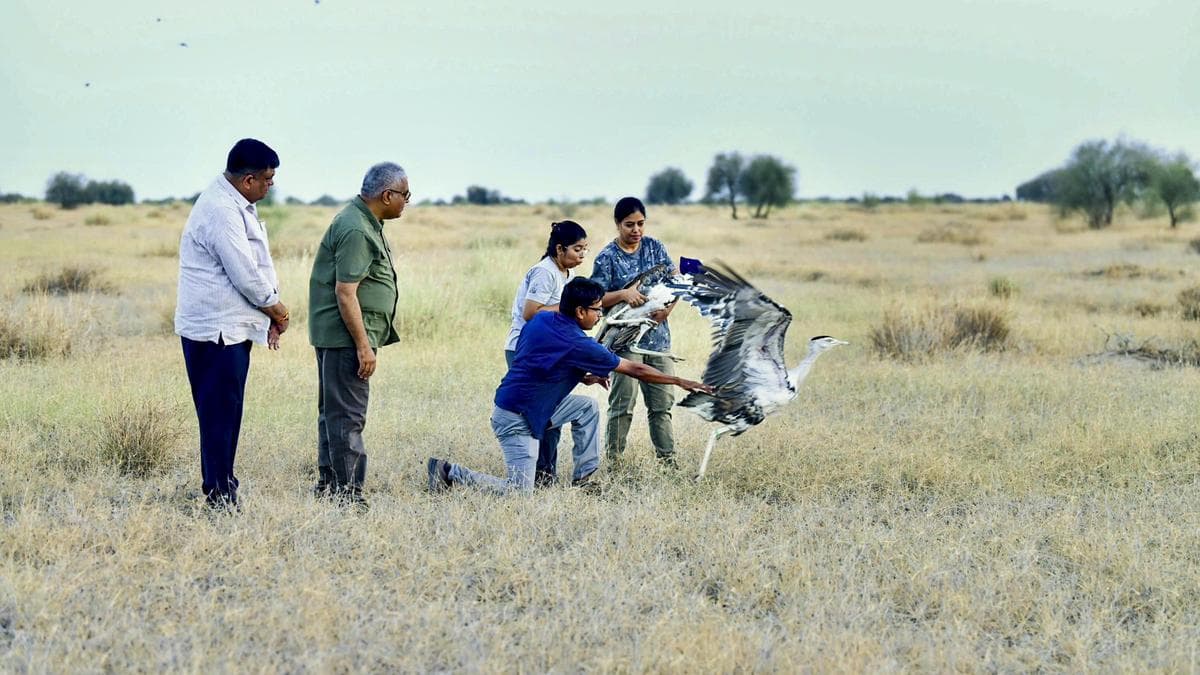
Captive-Bred Great Indian Bustards Released into the Wild at Desert National Park
Oct 16, 2026