Critical Evaluation: The "So What?" Layer of Technological Adoption
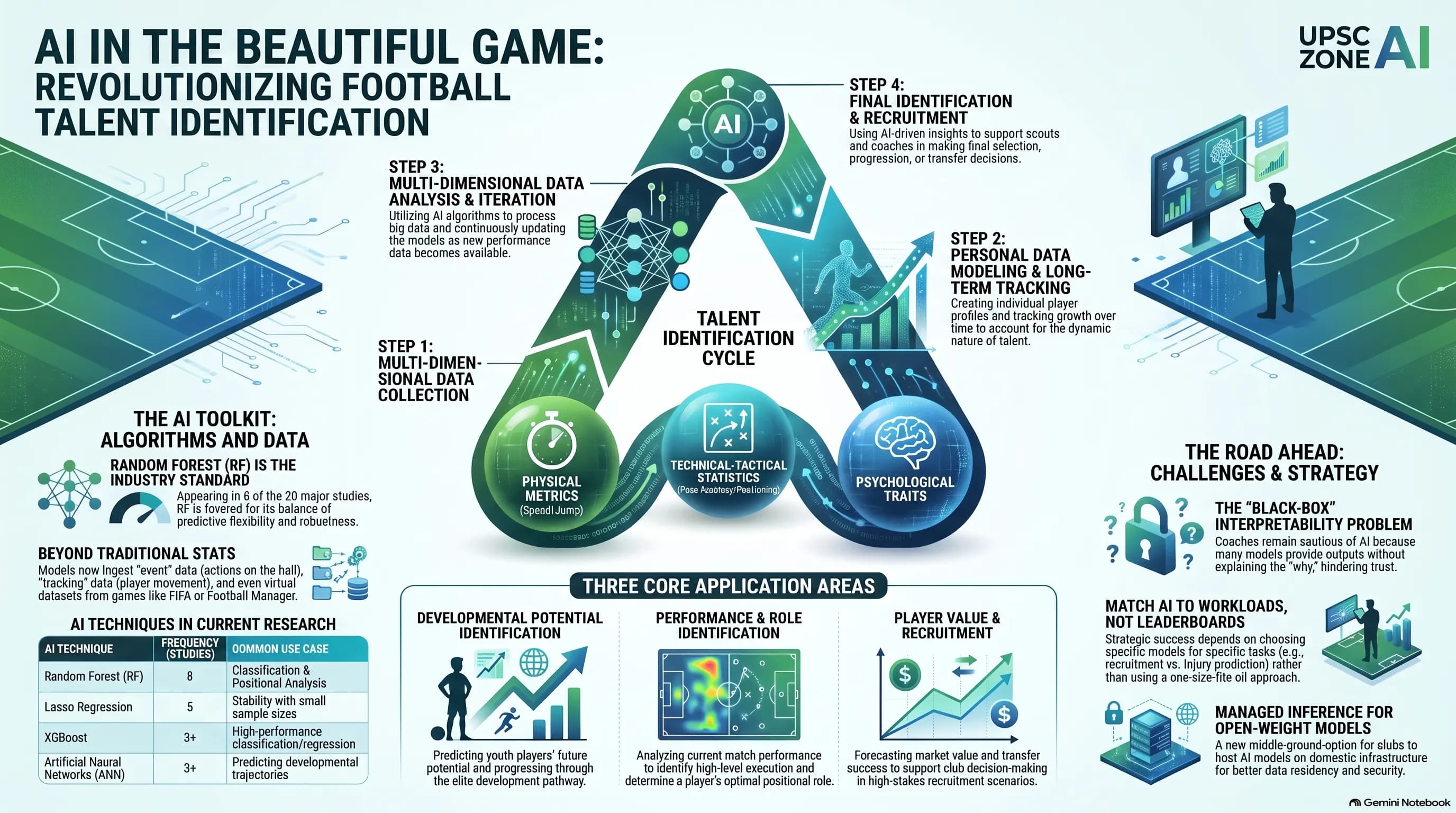
A fundamental tension in sports AI is the distinction between predicting current fit and identifying long-term potential. Most current AI models utilize cross-sectional data—performance metrics from a single point in time. This approach identifies the "best" current players but often fails to account for the "malleability" of youth talent. Because development is non-linear and "stage-like," models may inadvertently prioritize early-maturing players. This is where Action Valuation Frameworks like VAEP (Valuing Actions by Estimating Probabilities) and EPV (Expected Possession Value) come into play. While these frameworks successfully quantify the immediate contribution of a player’s actions on the pitch, they primarily evaluate current performance rather than a player's ceiling ten years in the future.
The "Black-Box" interpretability problem remains the primary barrier to Human-AI collaboration. In high-stakes environments, a scout must justify a multimillion-pound investment. If an algorithm flags a player without an explainable rationale, it fails the "trust test." Furthermore, gender bias is a significant concern; female talent identification is uniquely complex due to biological markers like menstrual cycles and ACL injury risks. Directly applying male-derived models to female populations creates a structural inequality that hinders inclusive growth in the sport.
Live Test Series
Join thousands of aspirants in our weekly live mock tests. Get real-time ranking and detailed analysis.
AI in Talent Identification: Capabilities vs. Constraints
Aug 20, 2026
What specific biases (like biological maturation) do AI models encounter?
Aug 20, 2026
How does AI predict a youth player's professional development potential?
Aug 20, 2026

What is g-AMIE?
Aug 18, 2026

Can Chatbots Serve Doctors and Patients?
Aug 18, 2026